Table of Contents
- Who is a POSP Partner?
- Who Can Become a POSP Insurance Partner?
- Homemakers
- Shopkeepers and Retailers
- Self-employed Professionals & Business Owners
- Financial Consultants and Advisors
- Retired Individuals
- College Students
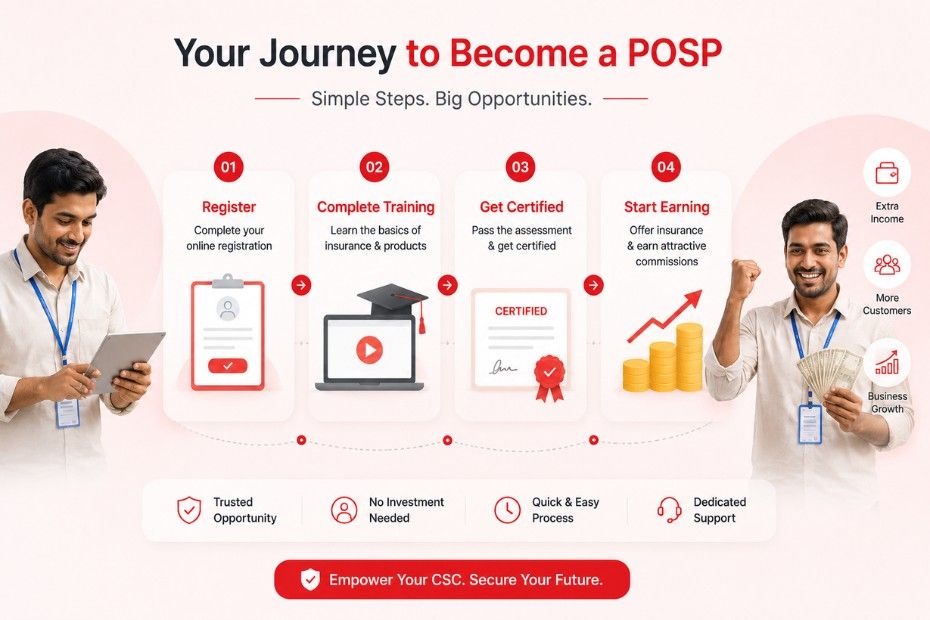
- Step-by-Step Guide on How to Become an Insurance Partner
- Step 1: Fill out the Form
- Step 2: Submit Required Documents
- Step 3: Complete Training and Certification
- Step 4: Get Appointed as a Partner
- Step 5: Start Selling Insurance Policies
- Step 6: Make Your Business Bigger and Better
- Conclusion
- FAQs
Currently, the economy is changing very quickly. That's why business owners and professionals are always looking for ways to make more money and offer more services. One of the best ways to do that is by becoming a POSP.
Thanks to increasing financial awareness, the demand for insurance products is slowly rising among Indian households. Becoming a POSP can enable individuals to help clients choose appropriate policies. Also, they get to earn commissions, leading to long-term passive income.
Keep scrolling to learn how to become a POSP insurance partner!
Who is a POSP Partner?
As a POSP (Point of Sale Person), you act as a licensed intermediary for customers and insurance companies. So, basically, you help people figure out what kind of insurance they need, suggest policies that will work for them, and help them make the purchase.
Additionally, a POSP mostly deals with simple, pre-approved insurance plans. They may include motor insurance, health insurance, travel insurance, personal accident insurance, and specified life insurance products. As these products are standard and easy to explain, selling them is faster and easier, even for people who have never done it before.
Who Can Become a POSP Insurance Partner?
Anyone can become a POSP insurance partner. However, this role is ideal for the following individuals:
-
Homemakers
Homemakers can make good use of their free time and be financially independent even if they have never worked before. Setting aside a couple of hours and working from home accordingly is all that's required.
-
Shopkeepers and Retailers
Retailers and shopkeepers can make extra money by selling insurance products to their existing customers.
-
Self-employed Professionals & Business Owners
Entrepreneurs and freelancers can earn commission-based income from POSP insurance. They simply need to do some extra work by using the sales and networking skills they already have.
-
Financial Consultants and Advisors
Advisors and financial consultants can provide insurance services to their existing client base. This will help the clients make valuable decisions and save more money.
-
Retired Individuals
A great way for retirees to stay busy and make money at their own pace is to work from home and use their network.
-
College Students
Being a POSP insurance partner helps students make some extra money while learning new skills, such as sales and communication, pretty early in their careers.
Step-by-Step Guide on How to Become an Insurance Partner
Here are the steps you need to take if you are wondering how to become a POSP insurance partner:
Step 1: Fill out the Form
Firstly, sign up with an insurance company or a platform that brings together different insurance partners. This is easy to do online. You need to sign up and begin the process of becoming an insurance partner.
Step 2: Submit Required Documents
Some of the things you'll need to show are proof of your age, proof of address, educational certificates, a PAN card, an Aadhaar card, passport-sized photos, and bank information.
Step 3: Complete Training and Certification
Take part in the 15-hour mandatory POSP training. These lessons teach you the basics of insurance, how to sell, and what you need to know about products. After this, you will need to clear the POSP exam.
If you are successful, you will be registered with the IRDAI and receive a license.
Step 4: Get Appointed as a Partner
After you gain your licence, the insurer will help set up your account and provide you with access to tools and leads to get started.
Step 5: Start Selling Insurance Policies
As soon as you get hired, you can start selling insurance and giving advice to people. You can start with people you already know and slowly get more clients.
Step 6: Make Your Business Bigger and Better
As you gain experience, work on making connections, getting people to recommend you, and learning more about the products you sell. This helps you become a better independent insurance partner over time and builds a steady stream of income.
Conclusion
To become a POSP, you do not need to collaborate with large agencies or be an experienced professional. You just need to be above 18 years of age, have passed Class 10 and have basic documents like an Aadhaar and a PAN card.
Once you meet these requirements, you can register with InsuranceDekho and take the first step to getting started.
FAQs
-
How to become a POSP insurance partner in India?
You have to meet certain eligibility requirements, complete training, pass a certification exam, and sign up with an insurance company or platform to become an insurance partner. Using the POSP model makes this easy and quick.
-
Do I need a license to start selling policies?
Yes, you need to obtain your license and complete the training and tests that accompany it before you can legally sell insurance policies.
-
How to become an independent insurance partner?
You can become an independent insurance partner by working with multiple insurers, building your own client base, and using digital platforms to manage and grow your business.
-
How can I apply for POSP online?
You can apply to be a POSP insurance partner online by signing up on the official platform of an insurer or aggregator, sending in your documents, going through training, and passing the certification process.
-
How much can an insurance partner earn?
How much money you make as a POSP insurance partner depends on how many policies you sell and renew. There is no set limit, and if you work hard every day, you can earn a steady income that grows over time.